
The Winery · Etyek-Vál
On the hills of Etyek — a village built of stone
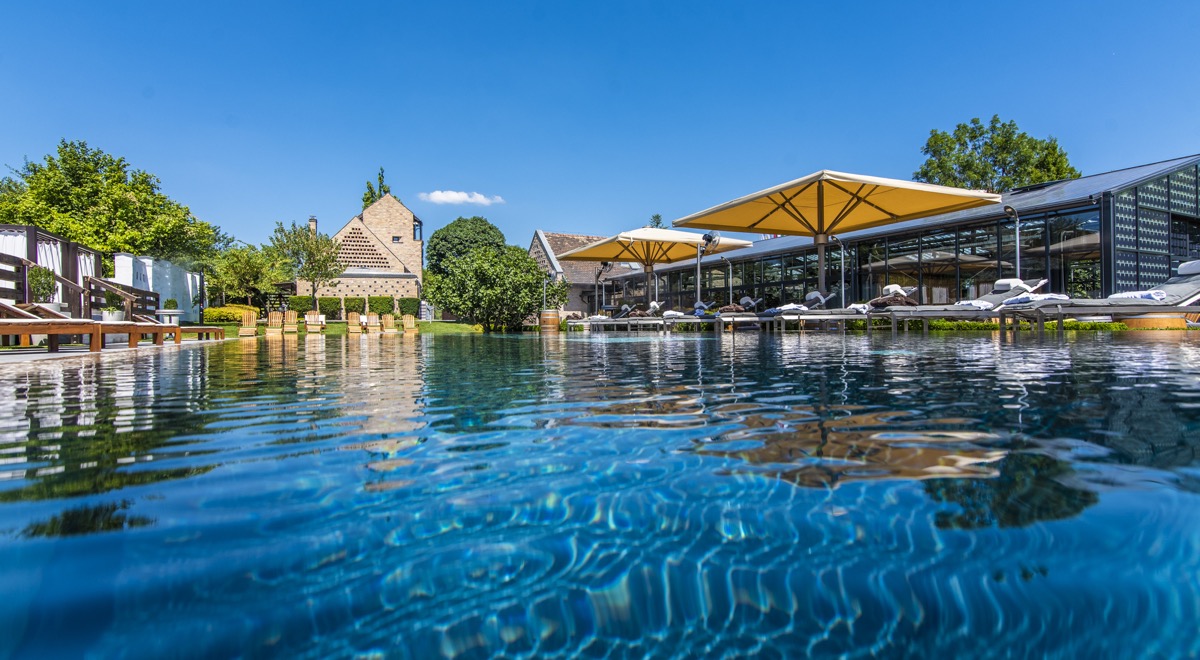
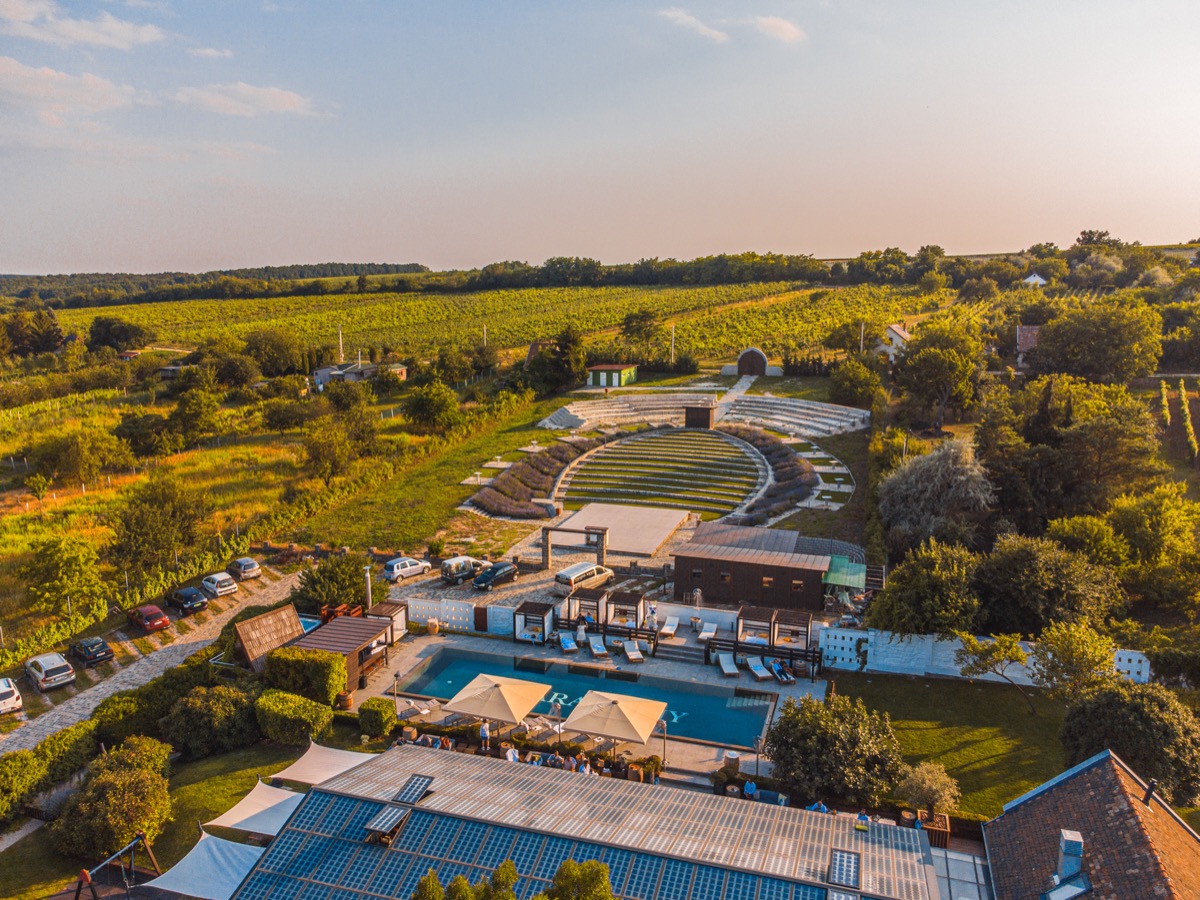
Haraszthy is more than vines and wine — relaxation, gastronomy, freedom, friendship and love in a single place.
2091 Etyek, Vincellér u. 44 · 30 minutes from Budapest
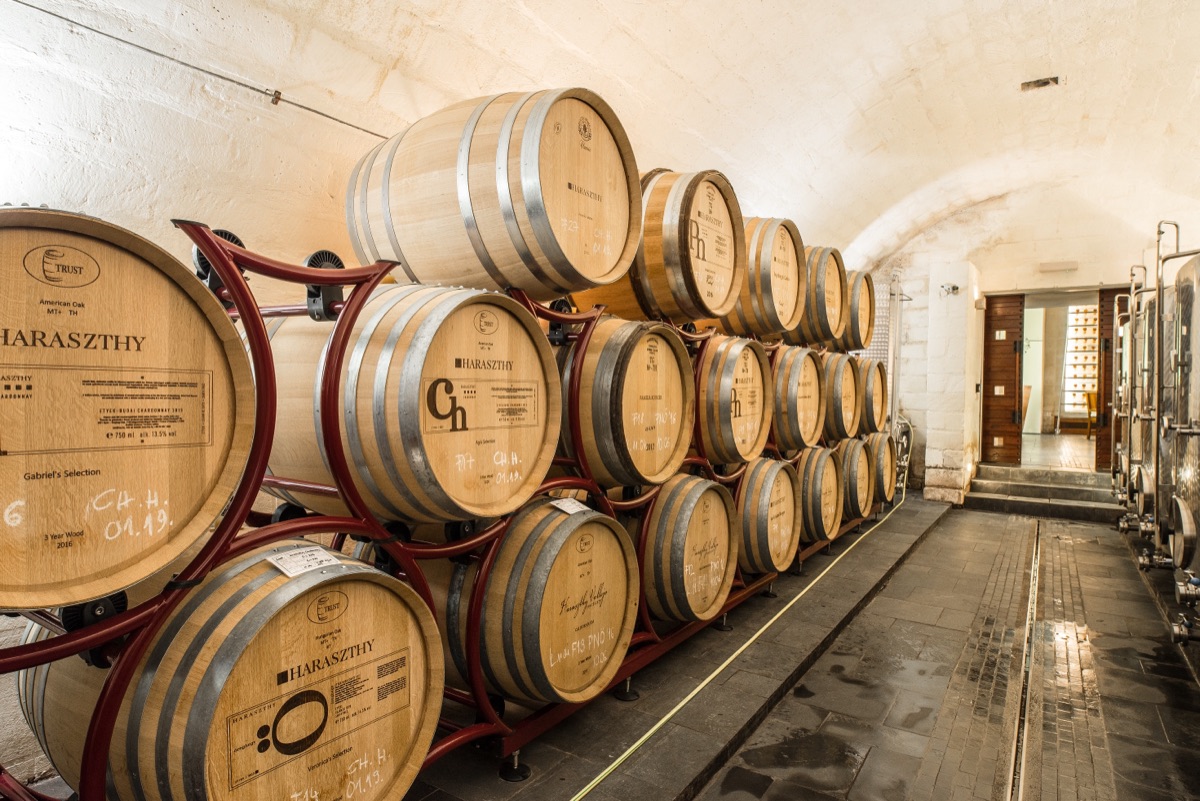
New flavours of an old tradition — for three decades we have been relearning what a glass of wine means on chalky soil, under cool nights, in the rhythm of patience.
Numbers
- Founded
- 1996
- Estate
- 123
- hectares
- Vintage
- 535,000
- bottles — 2022
- Position
- 2nd
- in the Etyek-Buda region
The place
Etyek and Vál — two estates, one craft
About 10% of our vineyards sit on Öreghegy in Etyek, right next to the cellar. From here we harvest our single-vineyard Öreghegy wines and the base for our premium sparkling.
The rest is in Vál, where most of the plantings are recent. The LOVE sculpture stands here — it lent its name to our LOVE wines.
Alongside Hungary’s traditional grapes we cultivate the great Burgundian varieties refined to Etyek: Irsai Olivér, Sauvignon Blanc, Chardonnay, Pinot Noir.
The architecture
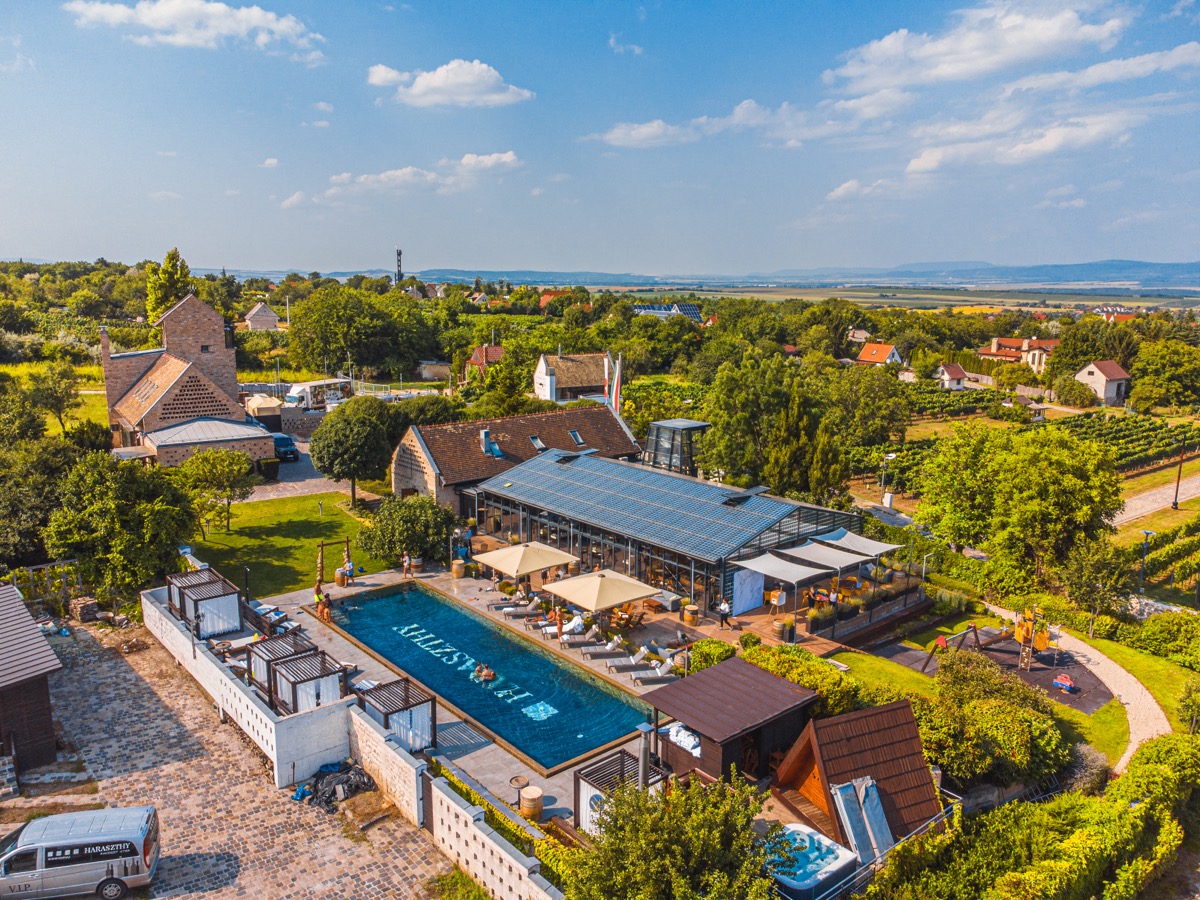
A Tuscan village in Sóskút limestone
We started building the cellar in 1998 on land with no water, no road, no electricity. Just earth and conviction.
Architect Ferenc Schüller imagined a Tuscan village rising organically from Hungarian soil, in Sóskút limestone. The square — repeated in fences, walls, doors — is a window for curiosity, our quiet brand symbol.
- Architect Ferenc Schüller
- Winemaker Dániel Pázmányi
- Founder Carlos Coelho
The Haraszthy world
Modern technology, traditional methods
Gentle, contemporary processing — sorting before destemming, controlled fermentation after pressing. Casein-free fining only.
-
I
LOVE
Reductive style, fresh and energetic — a sculpture and a feeling from the Vál ridge.
-
II
ETYEK
The estate baseline — clean fruit, well-structured, light, primary-aromatic.
-
III
GASTRO LINE
Made for restaurants — wines built around the table, paired with food in mind.
-
IV
Prémium · Fantástico
Only in exceptional vintages, from selected fruit. Generally drinkable from year three.
Come visit
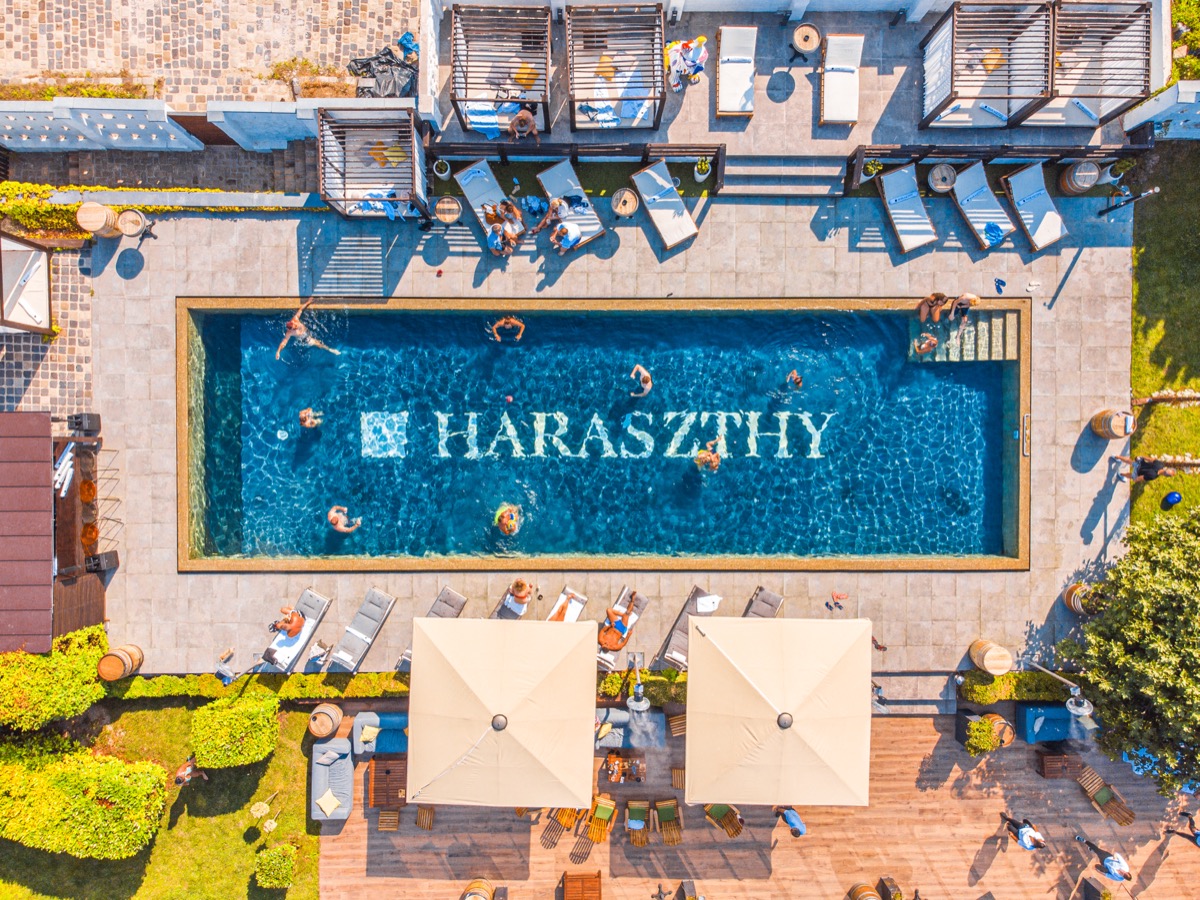
Tasting, club, Matador restaurant
The cellar is more than its wines — a day shared with the place, the table and the people.
- Experience Wine tasting Guided cellar tour with five to seven wines, house-made charcuterie, fresh-baked bread. Book
- Membership Wine Club Seasonal selections, exclusive lots and a standing discount for Haraszthy Wine Club members. Join
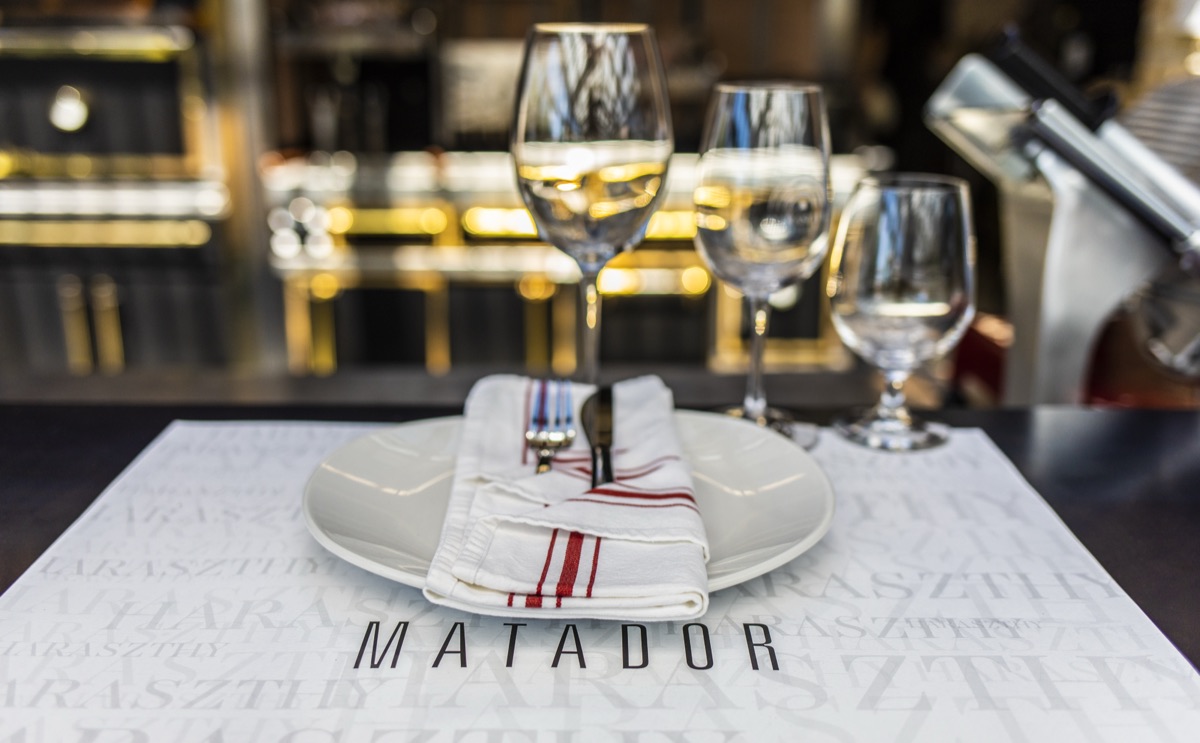
- Table Matador restaurant Glass roof above the vines — Schüller-designed restaurant, local cuisine, our cellar list. The restaurant (external site)
LOVE · Vál
A sculpture among the Vál vineyards
One of Burning Man's most-awarded sculptures stands today on the Vál ridge, open 24 hours. Love, like wine, is meant to be shared — visit whenever you wish.
Go to the LOVE page
Our story
Thirty years, nine milestones — from Argentina to Etyek.
A Friday in Eger, a house from nothing, a sculpture and a wine for every year — the full story lives on its own page.
Read the story